Account
Inquiry
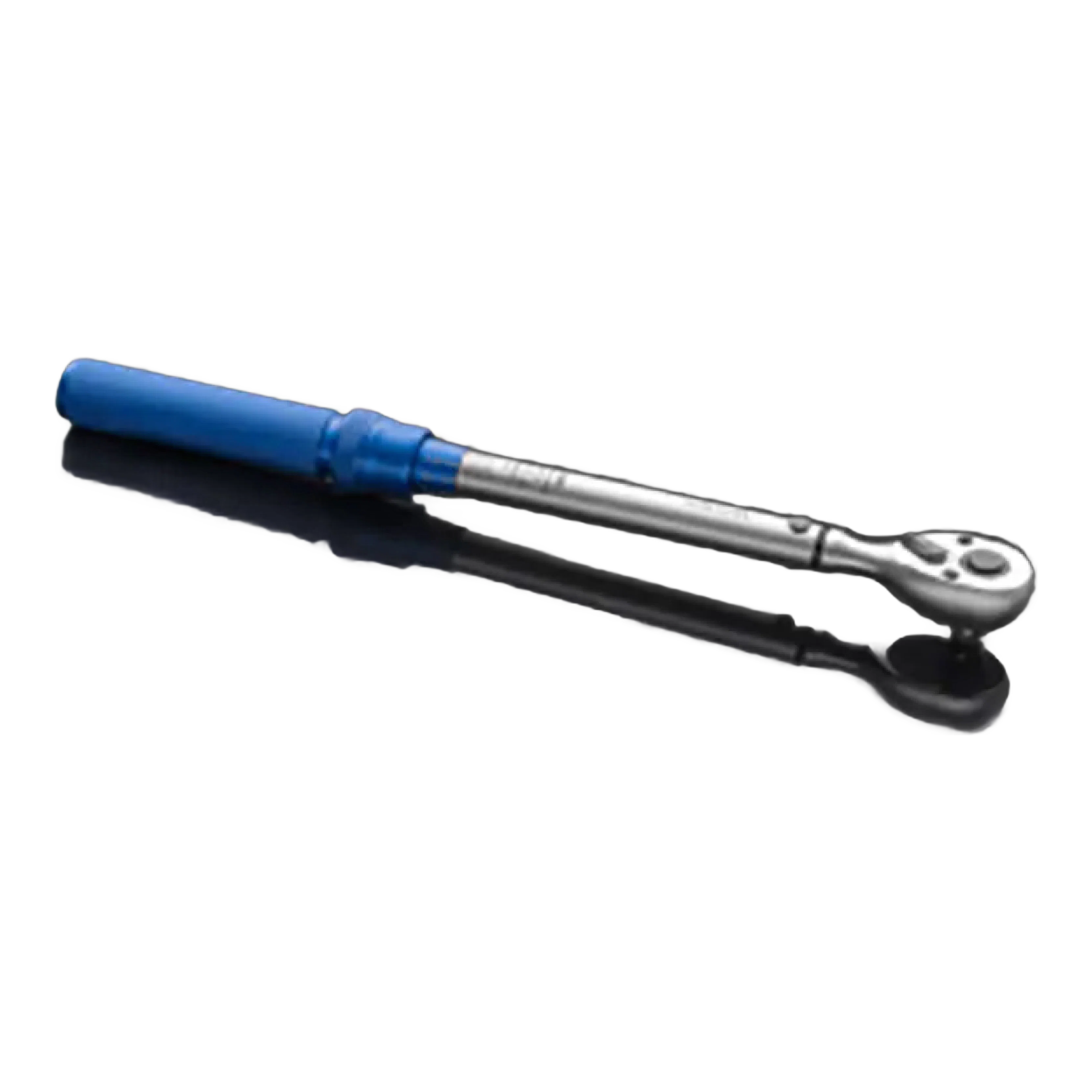
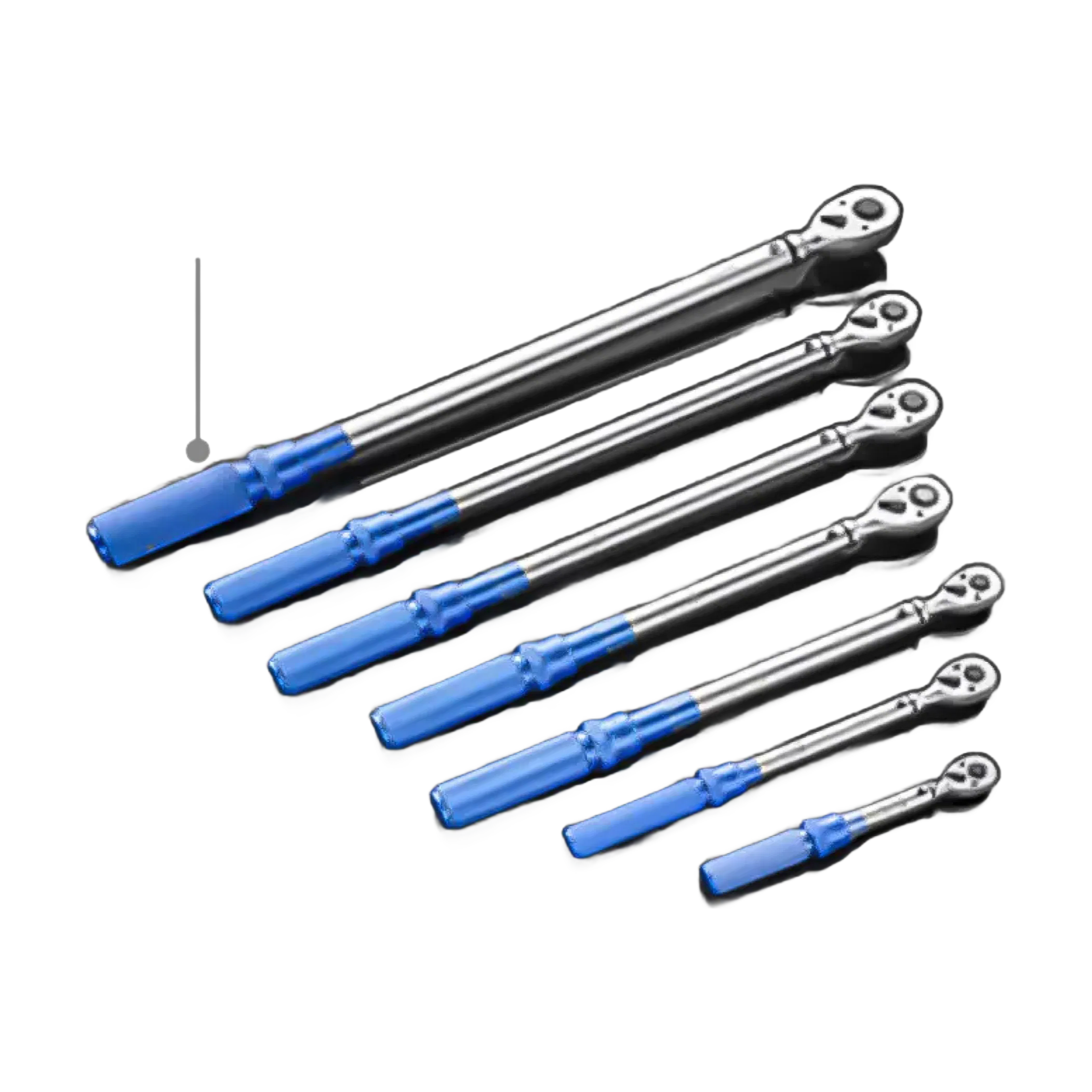
You’re dealing with a click-type torque wrench that signals when you hit target torque — no guesswork, just an audible click and a slight handle release when the preset value is reached, and it uses a 42Cr-Mo alloy gear head with a six-stage that holds up through 5,000 fatigue cycles without drifting off spec.
Basically, this covers automotive assembly, indutrial maintenance, and precision equiment work where over-tightening means snapped bolts or damaged threads, but it’s not suited for continuous production line use at max torque day after day — that’s where a hydraulic or digital wrench makes more sense.
The torque range is 10 to 60 N·m on a 3/8" drive, length at 295mm, weight about 475g, so it feels balanced for overhead work or tight engine bays. Accuracy is ±3% with a TUV/GS certificate and an actual calibration certificate in the box — most common alternatives spec ±4% and skip the paperwork. Gear teeth come in either 72T or 90T depending on stock, and 90T gives you a finer ratcheting arc (pretty much 4 degrees per click versus 5 degrees for 72T). Chrome-plated surfce resists corrosion, and the knurled aluminum handle actually stays grippy when your hands are oily.
What it does better than the cheap imports (usually around 50-70N·m range with ±5% accuracy) is maintain that ±3% after 5,000 cycles, not just fresh out of the box — we fatigue test every batch, and the COA shows real test results (usually 2-4 weeks lead time for custom calibration ranges). The 6-stage isn’t just marketing; it reduces internal stress in that 42Cr-Mo alloy, so the click mechanism doesn’t drift after a few hundred uses.
Also, we keep stock in three packging formats: blow-molded case with the wrench and certificate, or just wrench in a polybag if you’re buying in MOQ of 50 units or so for toolkits. Most buyers go with the case version because of that it protects the adjustment scale and keeps the calibration cert form getting lost. One detail you wouldn’t think to ask: the adjustment knob on the handle has a lock ring that prevents accidental torque changes when you’re setting it down between fasteners — that’s a common failure point on sub-$30 wrenches. Anyway, the 3/8" drive version is better than the 1/2" options for tight-clearance work on engines or control panels, but if you need above 60 N·m you’ll want the 1/2" body instead.
Yes, 10-60N·m works for most automotive lug nuts (typically 80-120N·m) and many smaller industrial fasteners. For larger truck or machinery bolts, you'd want a higher-range model.
Each wrench comes with its own calibration certificate showing ±3% accuracy, so no extra request needed.
We can do single units for testing, but MOQ for bulk orders is 50 pieces. Custom packaging or branding is available at 200+ units.
72T gives a 5° swing angle per click, while 90T gives 4°. The 90T is smoother for tight spaces, but both pass the 5,000-cycle fatigue test without accuracy drift.
Store it at room temp (15-25°C) with low humidity, and always set it to the lowest torque setting before putting it away. That keeps the internal spring from wearing out.
The shipping was incredibly fast and efficient. My order arrived well ahead of the estimated delivery date, which was a very pleasant surprise. The packaging was secure and professional, ensuring the tool was perfectly protected during transit. Regarding the quality, this torque wrench feels exceptionally solid and well-made. The construction from the specified alloy gives it a substantial, durable feel in the hand, instilling immediate confidence. The finish is precise, and the mechanism operates smoothly with satisfying, clear clicks. As for service, my pre-sales inquiry was answered promptly and thoroughly by a knowledgeable representative. The overall experience from ordering to unboxing was seamless. This level of attention to logistics, product integrity, and customer support is commendable and exceeds what one often encounters. It reflects a company that genuinely values its customers and stands behind its products. I am thoroughly impressed and would not hesitate to recommend this seller to others based on this outstanding holistic experience.
I was thoroughly impressed with the speed of the delivery. The package arrived well ahead of the estimated schedule, which was a fantastic start. Regarding the item itself, the build quality feels exceptionally solid and professional. The metal has a nice heft and finish, exactly what one hopes for in a precision tool. The service from the seller was also commendable; they provided clear communication throughout the process. Overall, this was a very smooth and satisfying transaction from start to finish. The product appears to meet its stated specifications perfectly, and I have no complaints about any aspect of the purchase experience. It is always a pleasure to deal with a seller who values prompt shipping and provides items that match their description so accurately. I would not hesitate to order from this vendor again in the future for similar tooling needs. The entire process, from clicking "order" to unboxing the well-packaged wrench, was handled with great efficiency.
I am thoroughly impressed with the overall experience of purchasing this torque wrench. The shipping was remarkably fast and efficient. I received the package much earlier than the estimated delivery date, which was a fantastic surprise. The item was packaged securely with ample protective materials, ensuring it arrived in pristine condition without any signs of damage from transit. Regarding the quality, the wrench feels exceptionally solid and well-made in hand. The materials used, including the mentioned alloy, seem premium and durable, giving immediate confidence in its longevity for professional use. The finish is smooth, and the markings are clear and precise. As for customer service, my inquiries prior to purchase were answered promptly and courteously. The communication was clear and helpful, making the buying process very straightforward. While I have not yet used the tool extensively on a project to comment on its technical performance in application, my initial assessment based on unboxing and inspection is extremely positive. The combination of swift logistics, apparent high-grade construction, and responsive support has made this a very satisfactory purchase. I would certainly consider this seller for future tool needs based on this experience alone.
Came exactly as described and arrived ahead of schedule, which was a fantastic start. The packaging was secure, ensuring the tool was protected during transit. The build quality feels exceptionally solid and professional, exactly what you would expect for a precision instrument. The finish is clean, and the mechanism operates very smoothly. Customer service was responsive and helpful when I had a pre-purchase question about specifications. Overall, a very positive experience from ordering to unboxing. This seems like a reliable tool for serious work, and the initial impression based on materials and construction is highly favorable. The delivery process was seamless with clear tracking updates provided. I appreciate the attention to detail in both the product and the service surrounding it. The item was well-protected, and there were no issues with missing parts or damage. The communication from the seller was clear and professional. I am confident in the durability and accuracy promised based on the initial inspection and handling. A straightforward and satisfactory purchase from start to finish. The logistical handling was efficient, and the product presentation upon arrival reflected care. The service interaction was polite and resolved my query promptly. The tool's heft and design inspire confidence for its intended automotive applications. Everything met or exceeded expectations regarding the transactional and physical aspects of this order. The shipping was faster than anticipated, which is always a bonus. The product itself appears meticulously manufactured with no visible flaws. I encountered no problems during the ordering or delivery phases. The seller's professionalism is evident in how the entire process was managed. This initial experience suggests a high level of reliability for both the product and the company behind it. The unboxing was straightforward, and all components were present as listed. I am pleased with the promptness and condition of the delivery. The quality of the materials used is immediately apparent, feeling robust and durable. The service provided was courteous and efficient. This purchase process was hassle-free and positive in every regard concerning logistics, perceived quality, and customer support.
Zippy delivery was the first thing that impressed me. The package arrived well ahead of the estimated schedule, which is always a welcome surprise. The product itself is securely and professionally packaged, showing clear attention to detail in the shipping process. Regarding quality, the wrench has a substantial and well-made feel in the hand. The finish is smooth, and the markings are clear and precise, giving an immediate sense of a robust and reliable tool. The overall construction seems excellent. On the service front, communication was straightforward and helpful. Any preliminary questions I had were answered promptly and clearly. The entire transaction, from ordering to unboxing, was seamless and hassle-free. A very positive experience overall based on these fundamental aspects of the purchase.
Hats off to the exceptional delivery speed—my order arrived much faster than anticipated, which was a pleasant surprise. The packaging was secure and intact, ensuring the item reached me in perfect condition without any delays or damages. As for the quality, it feels robust and well-crafted, giving me confidence in its durability for long-term use. The customer service team was responsive and helpful, promptly addressing my queries with clear, friendly communication. Overall, a highly satisfying experience that I'd gladly recommend to others.
Outstanding experience with this purchase! The delivery was incredibly fast, arriving two days earlier than estimated, which was a pleasant surprise. The packaging was secure and ensured the product reached me in perfect condition. Regarding quality, the torque wrench feels robust and well-made, with a solid construction that inspires confidence for both automotive and industrial tasks. Customer service was exceptional too; they responded promptly to my inquiry with clear and helpful information. Overall, a smooth and satisfying transaction from start to finish.
Zippy delivery was a pleasant surprise, arriving much sooner than anticipated. The build quality feels robust and reliable, with no visible defects. Customer service was responsive and helpful when I had a query. Overall, a smooth and satisfying experience from start to finish.
Upon receiving my order, I was thoroughly impressed by the exceptional delivery speed; the package arrived much earlier than anticipated, which was a pleasant surprise. Unpacking the item, the build quality immediately stood out—it feels robust and well-crafted, suggesting it will hold up well in demanding environments. Additionally, the customer service team was incredibly responsive and helpful when I had a minor query, making the entire purchasing process smooth and stress-free. Ultimately, this experience has left me very satisfied and confident in future dealings with this seller.
Quick delivery and excellent packaging ensured my torque wrench arrived safely without any delays. Quality-wise, the tool feels robust and well-made, with no visible defects, which gives me confidence in its durability. Service from the seller was outstanding; they responded promptly to my inquiries and provided helpful support throughout the process. Overall, a very satisfying purchase experience that I would highly recommend to others.