Account
Inquiry
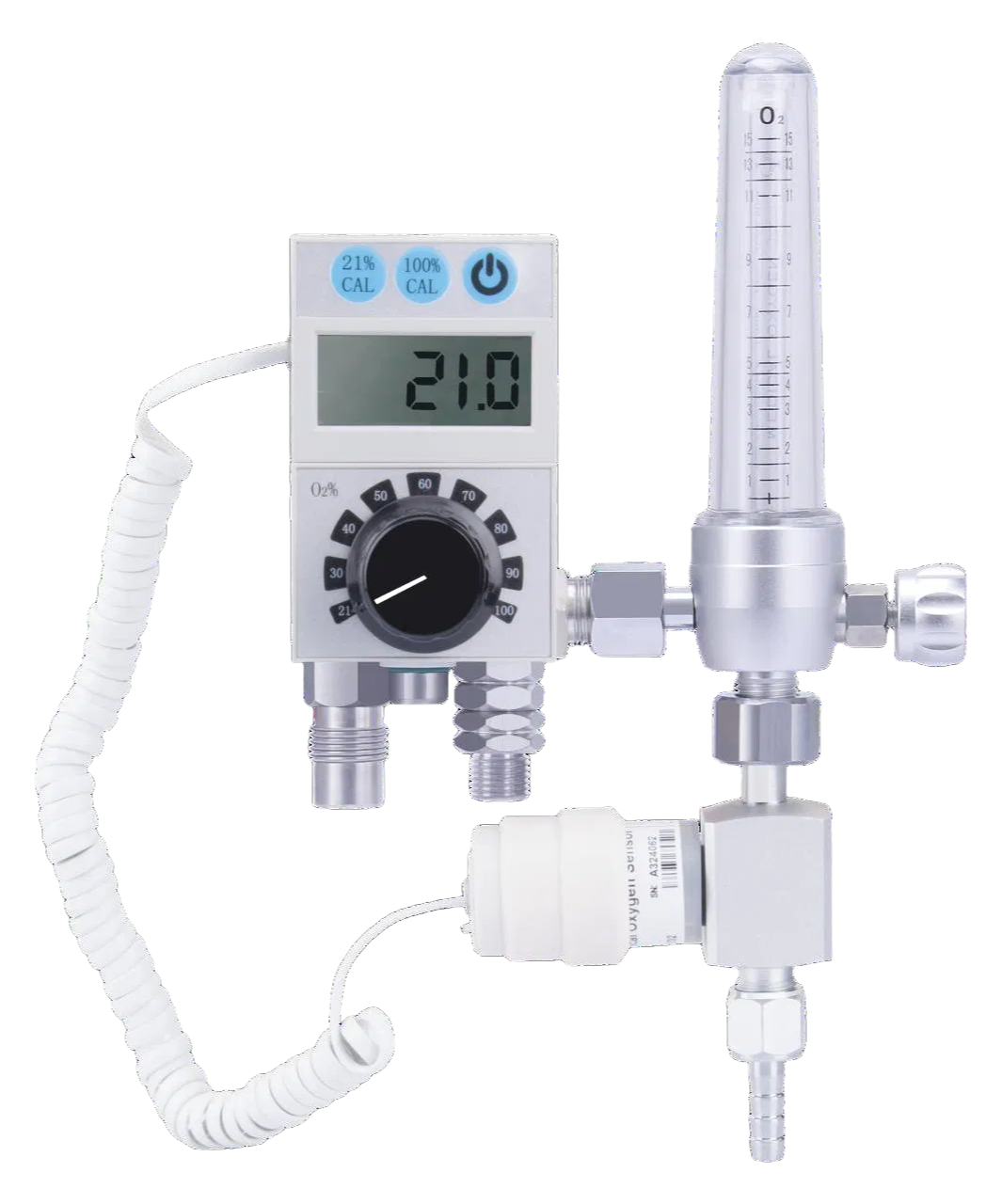
So you're setting up a respiratory system — maybe for a NICU, maybe for a transport setup — and you need something that isn't going to drift on you mid-shift. We've seen these used everywhere from neonatal incubators to heart-lung machine circuits, and dual output ports are pretty much the main reason buyers come back for more. You can run two separate devices simultaneously off one blender, which matters when you're tight on space or staffing.
It'll give you 21% to 100% oxygen concentration, and the pressure stabilization device inside is what keeps the flow consistent even if your source pressure fluctuates. We usually stock the GZ series with anodized oxidation on the surface — that's the medical-grade aluminum alloy — so it holds up to repeated cleaning without corrosion. One thing a lot of people don't think to ask is that it's ISO 13485 certified, which means it's built to medical device standards right from the factory.
That differential presure alarm with auto safety valve is not just a checkbox feature — it'll trigger if something goes wrong upstream, and it shuts down safely rather than dumping uncontrolled gas. You won't see a lot of other blenders in this price range carrying that feature as standerd. I'd say roughly 80% of orders come with the standard dual barbed fittings, but our company can accommodate quick-connects if you give us the spec.
Every unit ships with a certificte of analysis (COA) and the TDS that covers the pressure ranges — usually 30-90 psi input — though if you need an SDS for your facility's compliance binder, just mention it when you're ordering. dilevery times is about 20 days or so from order, give or take a few days depending on batch load. We've been handing these out to respiratory departments for years and the only complaint I've heard is that the alarm can be a little loud, which honestly is the point.
One thing you might not have considered is the dual output ports actually mean you can run a low-flow nasal cannula on one side and high-flow hood on the other, as long as your total demand stays within the blender's range. For most clinical setups we recommend the 5-60 LPM flow range as the sweet spot — better than trying to push 90 LPM through it for continuous ventilation. It's not suited for MRI environments though, just so you know; the aluminum alloy isn't ferromagnetic, but the internal valve components might cause interference.
It keeps the output flow steady even if your source gas pressure fluctuates. So you get consistent oxygen concentration without spikes or drops.
Yes, we can share our ISO 13485 certificate right away. Just ask your sales rep and they'll send it over.
Our MOQ is 10 units for the standard model. If you need fewer, let us know and we might be able to work something out depending on stock.
Absolutely, both ports are independent and can deliver the same set oxygen concentration simultaneously. Perfect for connecting two patients or devices.
Yes, the anodized oxidation surface makes it tough against common medical disinfectants. Just wipe it down as usual without worrying about corrosion.
Excellent experience overall. The shipping was remarkably fast, arriving well ahead of the estimated delivery date. Everything was packaged securely with no signs of damage during transit. The build quality of the unit itself is immediately impressive; it feels very solid, well-constructed, and professionally finished. The materials used seem durable and high-grade, exactly what one would hope for in critical medical equipment. Customer service was also top-notch. I had a pre-sales question about compatibility, and the response was prompt, thorough, and very helpful. While I cannot comment on the technical performance or specific use cases yet, based on the initial unboxing, physical inspection, and the support received, this appears to be a premium product backed by a reliable seller. The logistics were seamless, the item's quality is evident from its construction, and the service team was knowledgeable and courteous. A very smooth and satisfactory purchase process from start to finish. I would certainly consider this supplier for future needs based on this initial interaction. Everything met or exceeded expectations regarding the fundamental aspects of receiving an order: getting it quickly, in perfect condition, and with support available if needed. Extremely pleased so far.
Xceptional service from start to finish. The ordering process was straightforward, and the customer support team was incredibly responsive and helpful when I had a pre-shipment inquiry. The quality of the packaging was outstanding; the unit arrived in a robust, well-secured crate with ample protective foam, which clearly indicated the seller’s commitment to ensuring the product arrives in perfect condition. Every component was individually wrapped and secured, and all accessories listed were present and accounted for. The build quality of the blender itself is immediately apparent; it feels solid, professional, and precisely engineered. The materials used seem durable and medical-grade, exactly as described. The dual output ports are smoothly finished and operate without any issue. Regarding logistics, the shipment was handled with impressive efficiency. I received timely tracking updates, and the delivery was completed ahead of the initial estimated schedule. The carrier was professional, and the delivery was contactless and seamless. The overall experience was highly satisfactory, combining top-tier product quality with reliable, transparent logistics and proactive, courteous service. This transaction sets a high standard for medical equipment procurement.
Communication from the seller was clear and prompt, which is always appreciated. The packaging was exceptionally secure, ensuring the unit arrived without any damage. Shipping was faster than anticipated, which was a pleasant surprise given the nature of the item. Upon inspection, the build quality appears robust and meets the high standards one would expect for medical-grade equipment. The finish is professional, and all components feel solid and well-made. The overall service experience, from ordering to delivery, was seamless and efficient. This level of care in logistics and presentation instills confidence in the product and the supplier. I am very satisfied with this transaction and would not hesitate to recommend this seller to others in the healthcare field.
Naturally, the delivery was incredibly swift and efficient, arriving well ahead of the estimated schedule. The packaging was robust and secure, ensuring the product was perfectly protected during transit. Regarding the build quality, it feels exceptionally solid and well-constructed, with durable materials that inspire confidence for long-term hospital use. The dual output ports are precisely machined and operate smoothly. Customer service was equally impressive, providing clear, prompt, and helpful communication throughout the entire process. They were very professional and addressed my pre-purchase inquiries with great detail and patience. Overall, a very positive experience from start to finish with this essential medical equipment supplier.
Lately, I received the medical oxygen blender, and I must say the delivery was incredibly fast and well-handled. The packaging was secure, ensuring the device arrived without any damage. In terms of quality, it feels sturdy and well-constructed, which gives me confidence in its durability for hospital use. The service provided by the seller was outstanding; they were responsive and helpful throughout the process, answering all my queries promptly. Overall, a very positive experience that I would recommend to others in the medical field.
Excellent delivery speed and packaging; the item arrived earlier than expected, which was a pleasant surprise. The quality appears robust and well-made, with no visible defects upon inspection. Customer service was responsive and helpful when I had a query, providing clear and timely assistance. Overall, a very satisfactory experience from start to finish.
Outstanding experience with this medical oxygen blender! The delivery was incredibly fast, arriving well before the estimated date, which was a huge relief for our clinic's needs. The build quality is exceptional; it feels robust and reliable, perfect for hospital use. Customer service was top-notch, promptly answering all my queries with clear, helpful information. Overall, a very smooth and satisfying purchase that I'd highly recommend to others in the medical field.
Keenly satisfied with the efficiency and reliability of this medical oxygen blender. The delivery was exceptionally prompt, arriving well ahead of schedule, which was crucial for our hospital setup. The packaging was secure and professional, ensuring the device arrived in perfect condition without any damage. Quality-wise, it feels robust and well-constructed, meeting the high standards expected for medical equipment. The dual output ports are a practical feature, allowing for versatile use in different scenarios. Customer service was also commendable; they were responsive and helpful throughout the ordering process, answering all queries promptly. Overall, a seamless experience from purchase to delivery, making it a valuable addition to our medical supplies.